

Election 2026
Ward 2
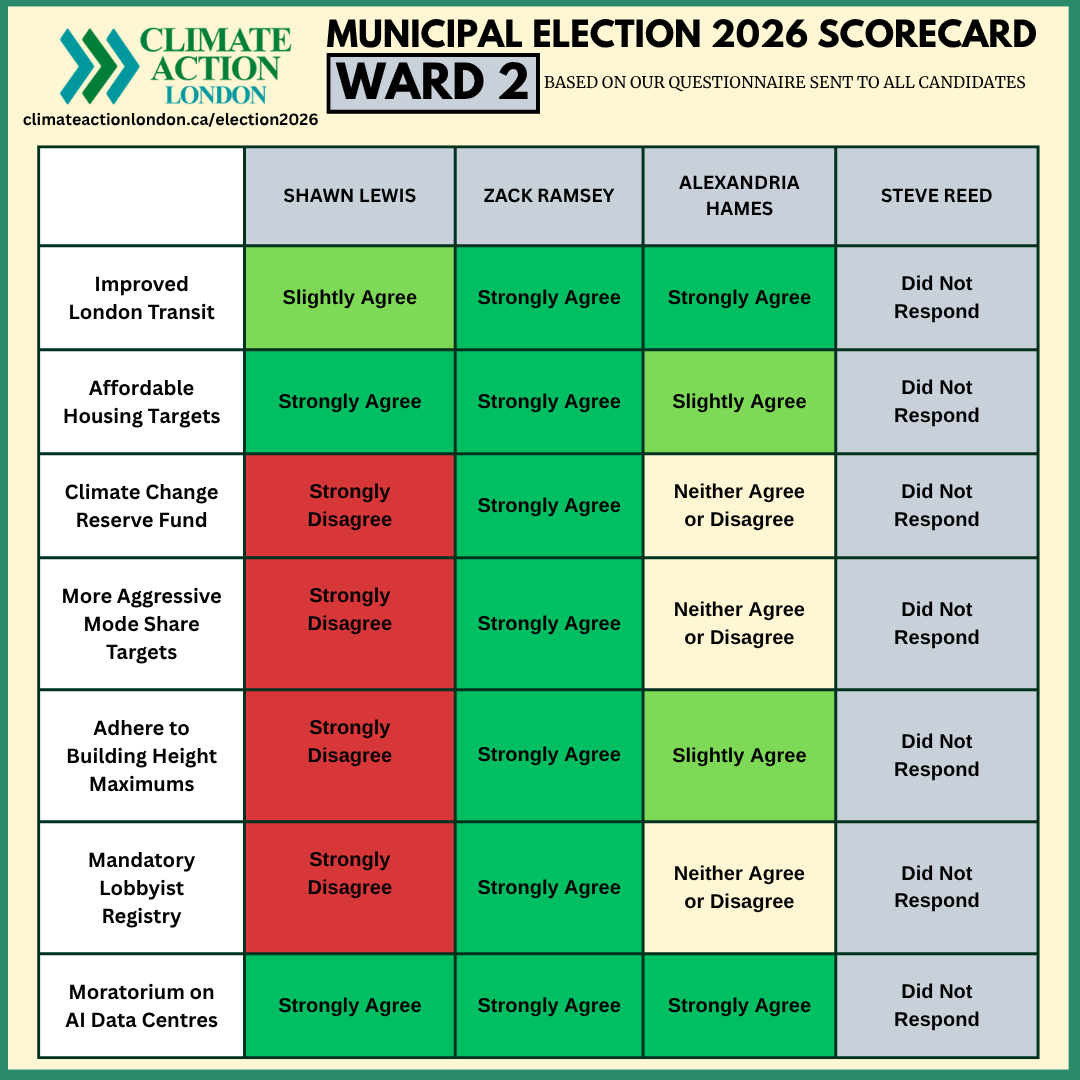
Candidate Responses Scorecard
This is a summary of candidate responses based on a 5 point agreement scale. To fully understand a candidate’s position it is important to take into account optional comments they may included.
Full Candidate Responses
Full responses from candidates including comments to the questions are including the spreadsheet below. We encourage you to read the full comments from candidates as it may reflect on their vision for the future of the City.
We contacted all candidates with email addresses per the City of London website. We took additional measures to determine methods of contacting candidates that did not have email addresses listed. The following candidates did not respond to our questionnaire; Alexandria Hames, Steve Reed
Use the scroll bars within the spreadsheet to navigate to view the responses.
You can view the official list of candidates on the City of London website
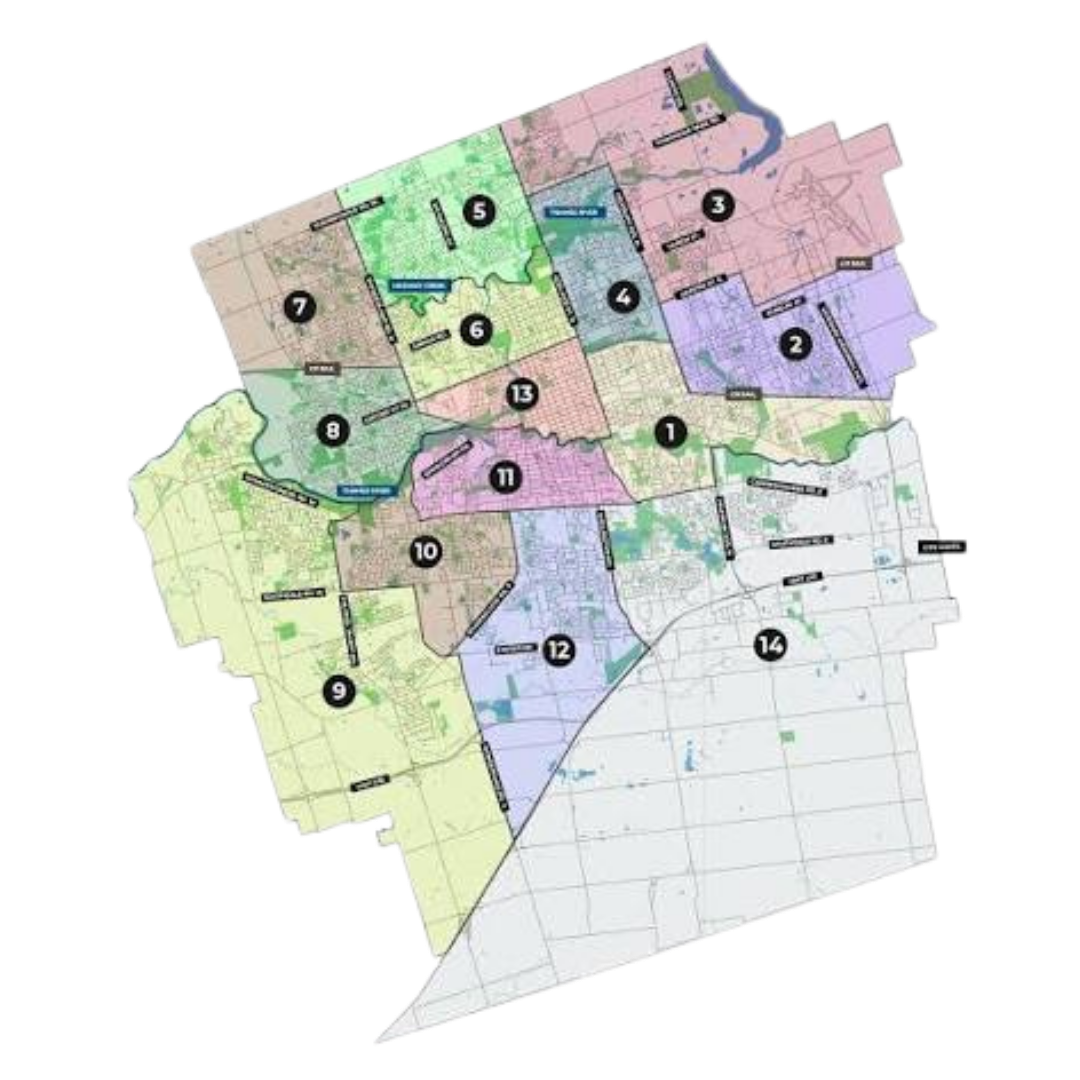
New Ward Boundaries!
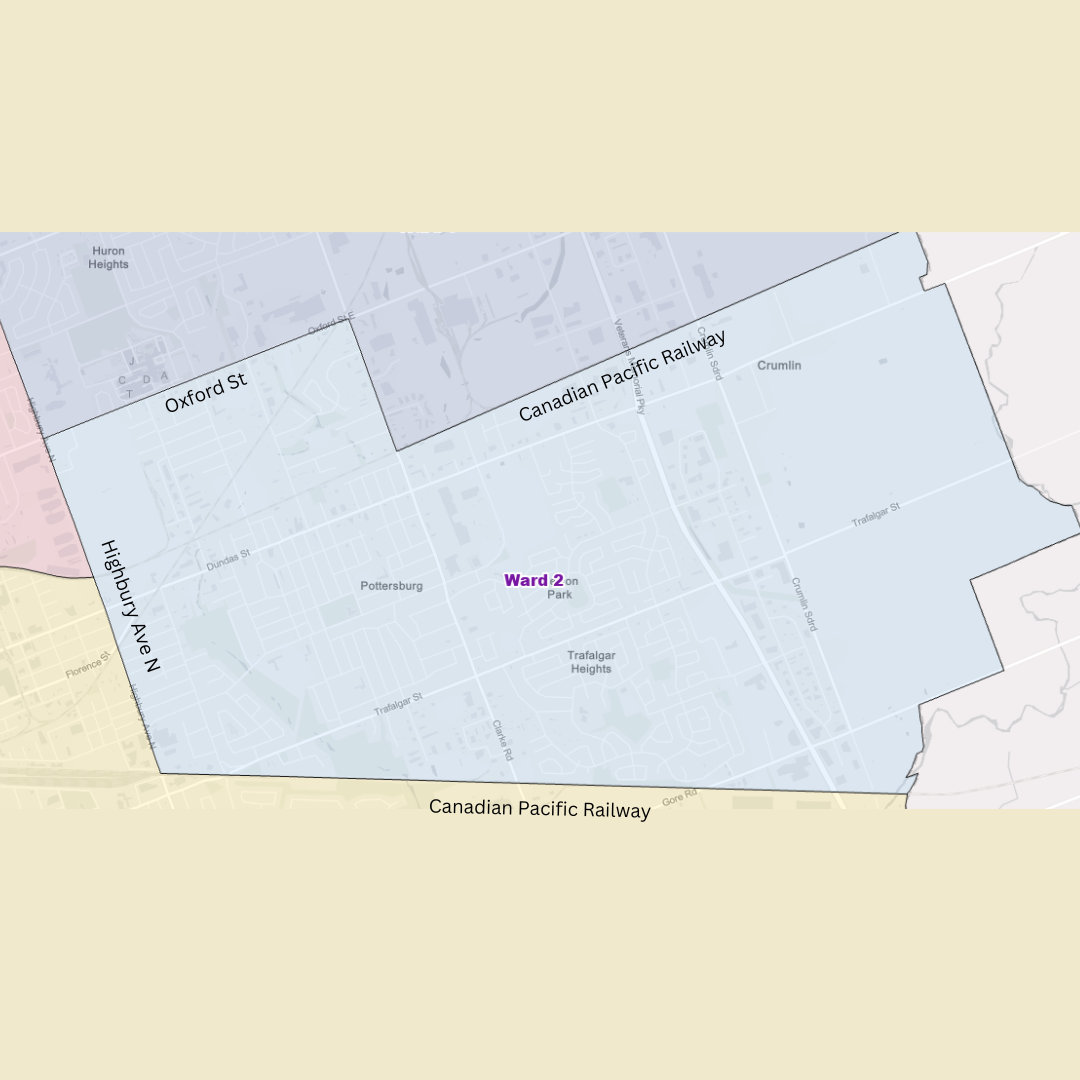
Double Check which Ward you live In?
The City of London has new Ward boundaries since the last election. You can double check based on an interactive map provided by the City of London.
Enter your address (top left) and you can visually see what Ward boundary you fall in.

All Candidate Meetings
Ward 2
Wednesday, September 23, 2026 | 7:00–8:00pm
East Lions Community Centre (1731 Churchill Ave.)
Watch the Ward 2 All Candidate Meeting on YouTube (Rogers tv)

Candidate Questions (in full)
An explanation of how we formulated our questions and why we asked each one can be found on the main Election 2026 page.
It is a priority to improve London Transit service by having 15 minute service frequency during peak weekday hours (maximum headway) on all main arterial routes while maintaining 10 minute service frequency on Rapid Transit routes. 15 minute service frequency is comparable to service in cities like Halifax and Kitchener-Waterloo. Additionally, London Transit should work to eliminate neighbourhood gaps where residents are not within 400m walking distance of a regularly service bus stop.
Improved London Transit Service
It is a high priority that the City of London meet the goal in the London Plan that 25% of new housing, in aggregate, (and 40% for secondary plans) is affordable to low- and moderate-income households. London has been falling short on this goal therefore it should commit to all means available to the City to increase the number of new affordable units including leverage of public lands, financial incentives to developers by reducing fees, expedited approval timelines and concierge service team for affordable developments and use of the Canada Housing catalogue of pre-approved designs. Additionally, the City should prevent private developers from turning affordable rental units into expensive ones.
Affordable Housing Targets
It is important to restore funding to the Climate Change Reserve Fund to $1m per year, as it was when it was initially created and only use the funds for genuine expenses related to mitigation and adaptation projects designed to increase London’s resilience to the increasing impacts of the Climate Emergency.
Climate Change Reserve Fund
More Aggressive Mode Share Targets (walking, cycling, transit)
The City of London should establish more aggressive 2050 mode share targets when they are next reviewed in 2028. it is important that the City move toward more daily trips by walking, cycling and transit given an increasing population, London’s GHG emissions slightly increasing and drastically missing CEAP targets and an increasing number of High Density and Medium Density residential buildings. It makes life more affordable for all Londoners.
Adhere to building height maximums as per the London Plan
Building height maximums as specified in the London Plan should be strictly adhered to as they represent comprehensive plans for the growth of the city taking into account utility demands, emergency services, mobility plans, and preserving neighbourhood character. Recently, council has been approving many developments that exceed both maximum heights and densities as per the London Plan. Given that place types such as downtown, transit villages and corridors and urban corridors already allow significant building heights to meet housing supply demands and intensification targets, individual exceptions should not be allowed but changes to these height and density maximums should only be addressed through official plan amendments.
Mandatory Lobbyist Registry
The City of London should implement a mandatory lobbyist registry. It would help promote public trust, prevent conflicts of interest and ensure fair access. Over 15 Ontario municipalities have mandatory lobbyist registries, many of which have low cost solutions. For example Guelph has implemented a solution costing less than $25,000 per year.
Moratorium on AI Data Centres
The City of London should implement a 1-2 year moratorium on AI Data Centres. There are many harmful aspects to AI Data Centres such as straining local energy grids, constant industrial level noise, heat island impacts over 2 degrees potential up to 10kms away, high water usage or other potential negative environmental impacts from maintaining closed loop cooling systems. AI Data Centres also provide very few jobs after construction. A moratorium would allow proper higher level government regulation and standards to be created before putting London residents at risk.