
 Image 1 of 2
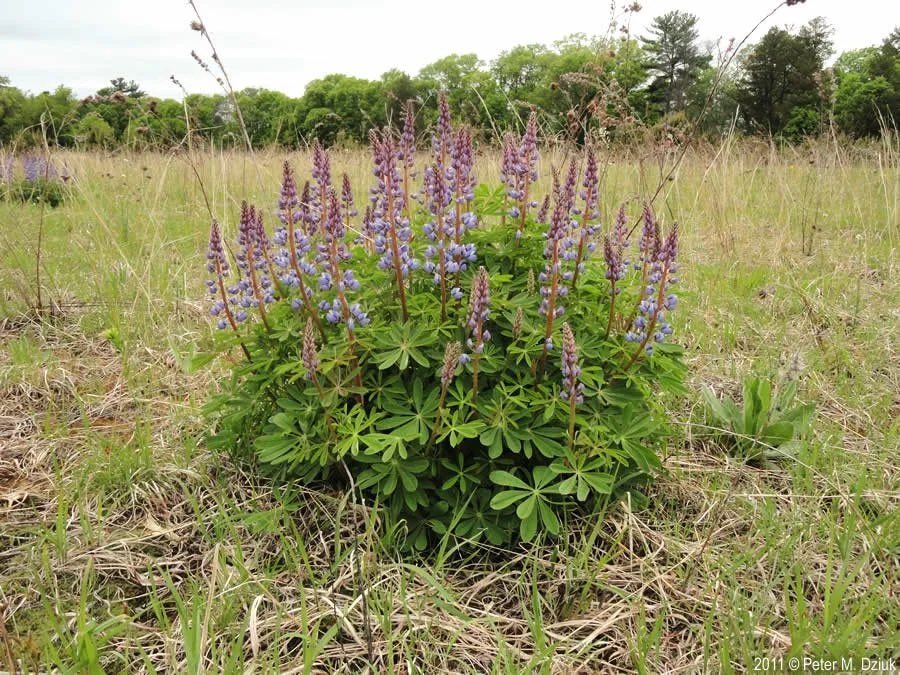 Image 2 of 2
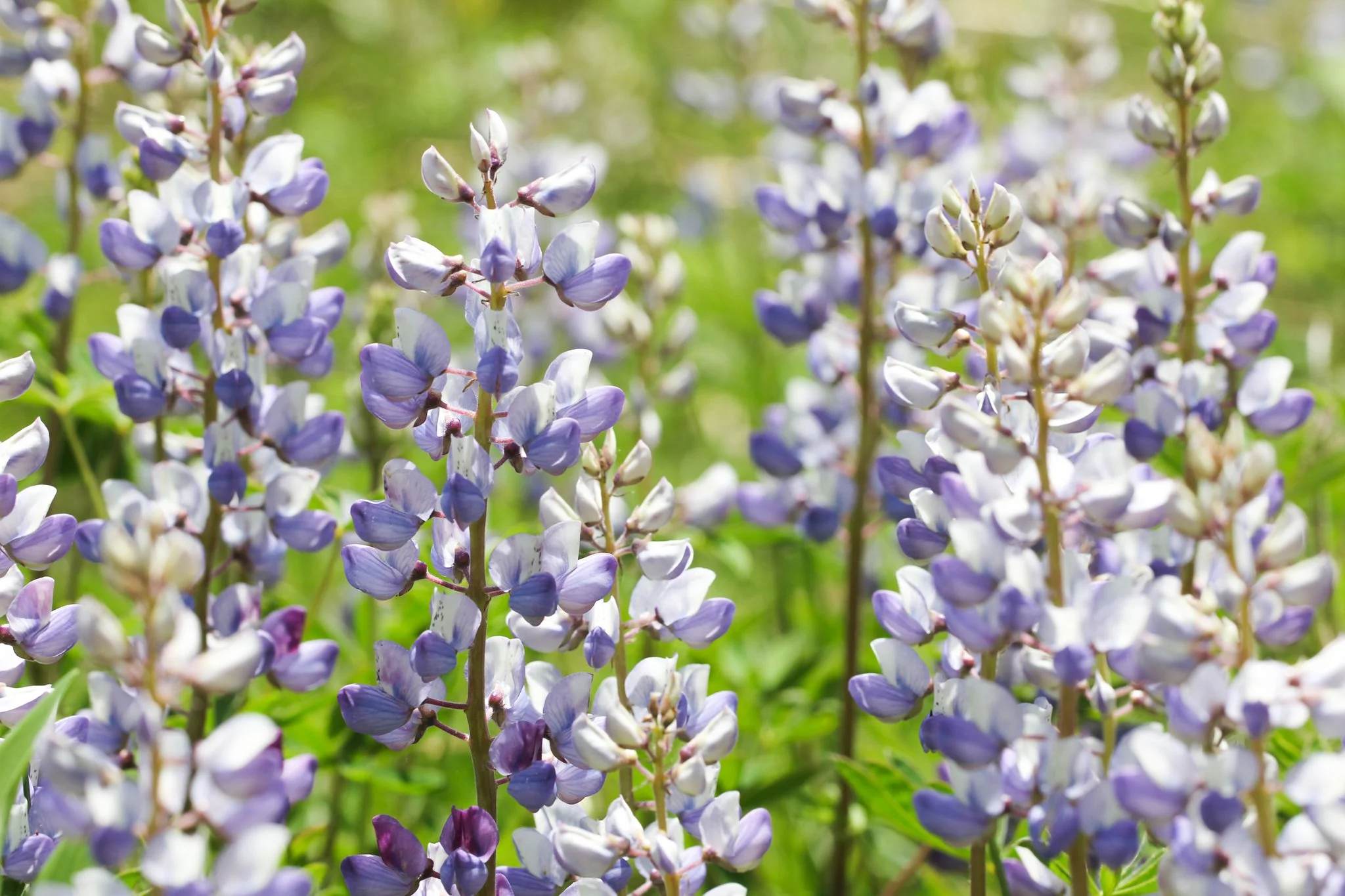
It is a wildlife-friendly plant that produces showy blue flowers in spring and may die down in the heat of the summer. As with all plants in the bean family, it fixes nitrogen allowing it to tolerate poor-nutrient soil.
Grows to 8-24"
Blooms May-June
Multiple spikes of showy pea-shaped flowers appear in spring and early summer and are followed by 2-inch-long legumes. The plant prefers cool weather for growing and may be short-lived.
This plant prefers moist to dry acidic sandy loams and full sun to partial shade. It is adaptable to other soils but they must be well drained. Use this plant in the middle of the border, in naturalized areas, in native gardens and the edge of woods.
The species supports a wide range of insect visitors, particularly bees, and serves as a critical larval host plant for several Lepidoptera. Most notably, it is the sole larval host for the endangered Karner blue butterfly, as well as an important host for species such as the frosted elfin and Persius duskywing (Rydberg, 1908; Lane and Andow, 2003).
Lupinus perennis
Photos by Peter Dzuik of Minnesota Wildflowers and cassi saari https://commons.wikimedia.org/w/index.php?curid=72995600
It is a wildlife-friendly plant that produces showy blue flowers in spring and may die down in the heat of the summer. As with all plants in the bean family, it fixes nitrogen allowing it to tolerate poor-nutrient soil.
Grows to 8-24"
Blooms May-June
Multiple spikes of showy pea-shaped flowers appear in spring and early summer and are followed by 2-inch-long legumes. The plant prefers cool weather for growing and may be short-lived.
This plant prefers moist to dry acidic sandy loams and full sun to partial shade. It is adaptable to other soils but they must be well drained. Use this plant in the middle of the border, in naturalized areas, in native gardens and the edge of woods.
The species supports a wide range of insect visitors, particularly bees, and serves as a critical larval host plant for several Lepidoptera. Most notably, it is the sole larval host for the endangered Karner blue butterfly, as well as an important host for species such as the frosted elfin and Persius duskywing (Rydberg, 1908; Lane and Andow, 2003).
Lupinus perennis
Photos by Peter Dzuik of Minnesota Wildflowers and cassi saari https://commons.wikimedia.org/w/index.php?curid=72995600