
 Image 1 of 2
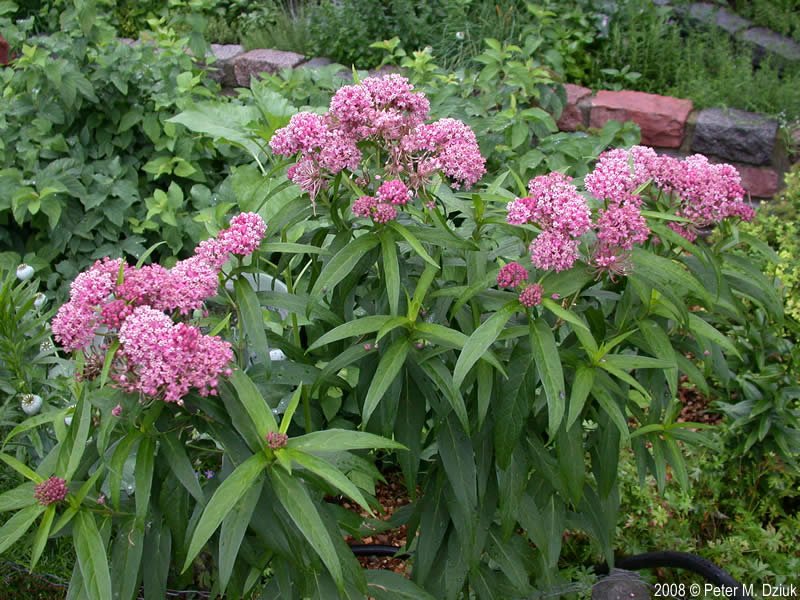 Image 2 of 2
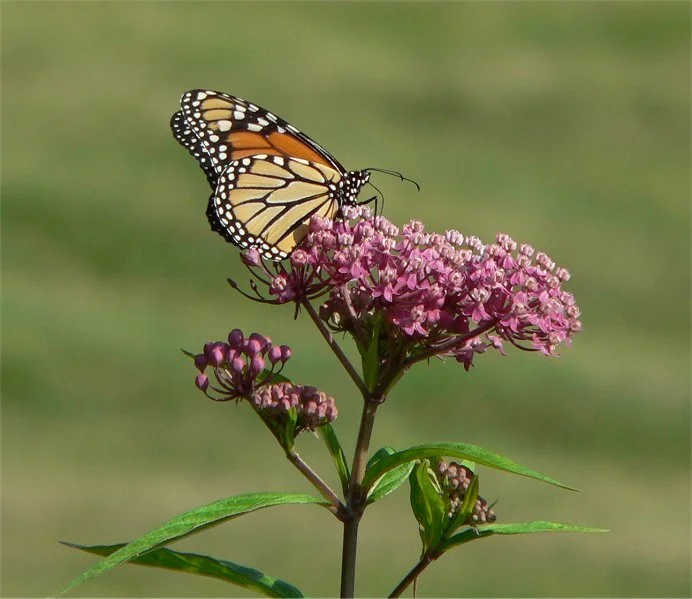
Swamp milkweed prefers neutral to slightly acidic soil with rich, wet, very muddy to average garden moisture and full sun or partial shade. It is most often found on the margins of flooded plains, lakes, ponds, waterways, marshes, swamps, and other wet areas. It is one of the best attractors of the monarch butterfly, which feeds on the flowers and lays eggs on the plants. The emerging caterpillars feed on the leaves.
The plant is slow to spread via seeds, does not spread by runners and tends to disappear as vegetative densities increase and habitats dry out. Although plants can survive for up to 20 years, most live only two-five years in gardens. The species is not shade-tolerant.
Grows to 12-48"
Blooms June- September
Attracts hummingbirds and butterflies
Tolerates deer, clay soil, wet soil
Asclepias incarnata
Photos by By Teune https://commons.wikimedia.org/w/index.php?curid=4796425, Peter Dzuik of Minnesota Wildflowers
Swamp milkweed prefers neutral to slightly acidic soil with rich, wet, very muddy to average garden moisture and full sun or partial shade. It is most often found on the margins of flooded plains, lakes, ponds, waterways, marshes, swamps, and other wet areas. It is one of the best attractors of the monarch butterfly, which feeds on the flowers and lays eggs on the plants. The emerging caterpillars feed on the leaves.
The plant is slow to spread via seeds, does not spread by runners and tends to disappear as vegetative densities increase and habitats dry out. Although plants can survive for up to 20 years, most live only two-five years in gardens. The species is not shade-tolerant.
Grows to 12-48"
Blooms June- September
Attracts hummingbirds and butterflies
Tolerates deer, clay soil, wet soil
Asclepias incarnata
Photos by By Teune https://commons.wikimedia.org/w/index.php?curid=4796425, Peter Dzuik of Minnesota Wildflowers