
 Image 1 of 1
It is found primarily in wet places, such as riparian zones, riverbanks, bogs or swamps. It is also sometimes found in damp or semi-flooded and shaded forest areas.
Grows to 12-60"
Blooms July-September
It requires rich, fairly deep soil which remains reliably moist—yet sufficiently aerated—all year-round; alternatively, it may be grown as an accent plant in or along ponds, fountains or other garden water features, with its pot positioned so it can always access water. If not planted in or around a water source, L. cardinalis tends to prefer for its roots to stay cool, something achieved when grown in dappled sun or part shade.
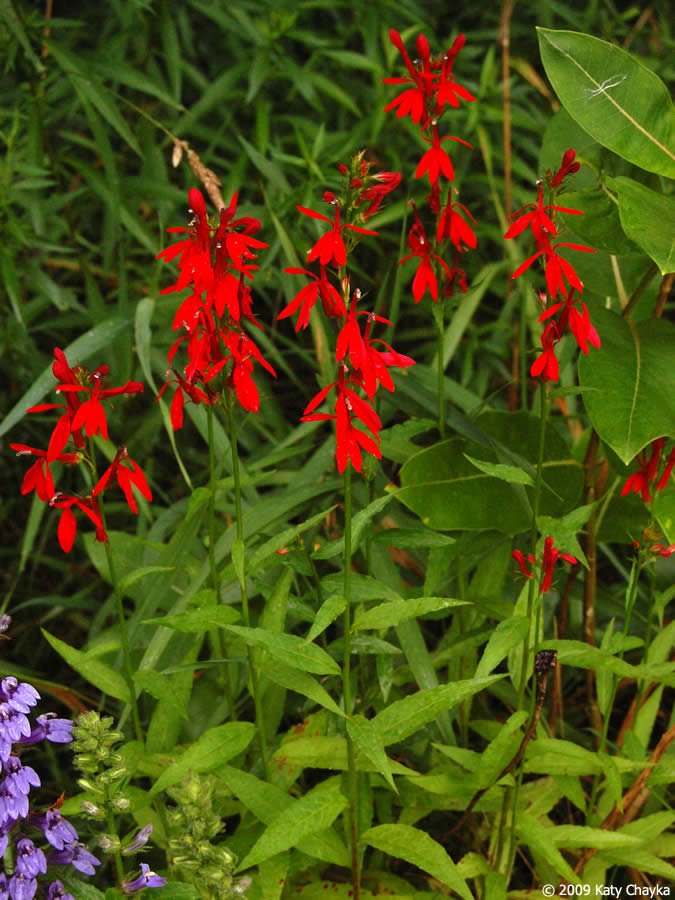
Lobelia cardinalis
photo by Katy Chayka of Minnesota Wildflowers
It is found primarily in wet places, such as riparian zones, riverbanks, bogs or swamps. It is also sometimes found in damp or semi-flooded and shaded forest areas.
Grows to 12-60"
Blooms July-September
It requires rich, fairly deep soil which remains reliably moist—yet sufficiently aerated—all year-round; alternatively, it may be grown as an accent plant in or along ponds, fountains or other garden water features, with its pot positioned so it can always access water. If not planted in or around a water source, L. cardinalis tends to prefer for its roots to stay cool, something achieved when grown in dappled sun or part shade.
Lobelia cardinalis
photo by Katy Chayka of Minnesota Wildflowers